

Business

Why “good benefits” are no longer enough: the new reality of talent retention in 2026

AuthorCMG
Date18 May 2026
Reading time5 minutes

For years, companies competed for talent by stacking their benefits packages higher and higher. Gym memberships, free lunches, wellness apps, team buildings in attractive locations, all designed to signal that this is a great place to work.

Yet despite record investments in benefits and employer branding, many organizations are facing the same challenges: rising turnover, disengaged employees, and difficulty retaining high performers.

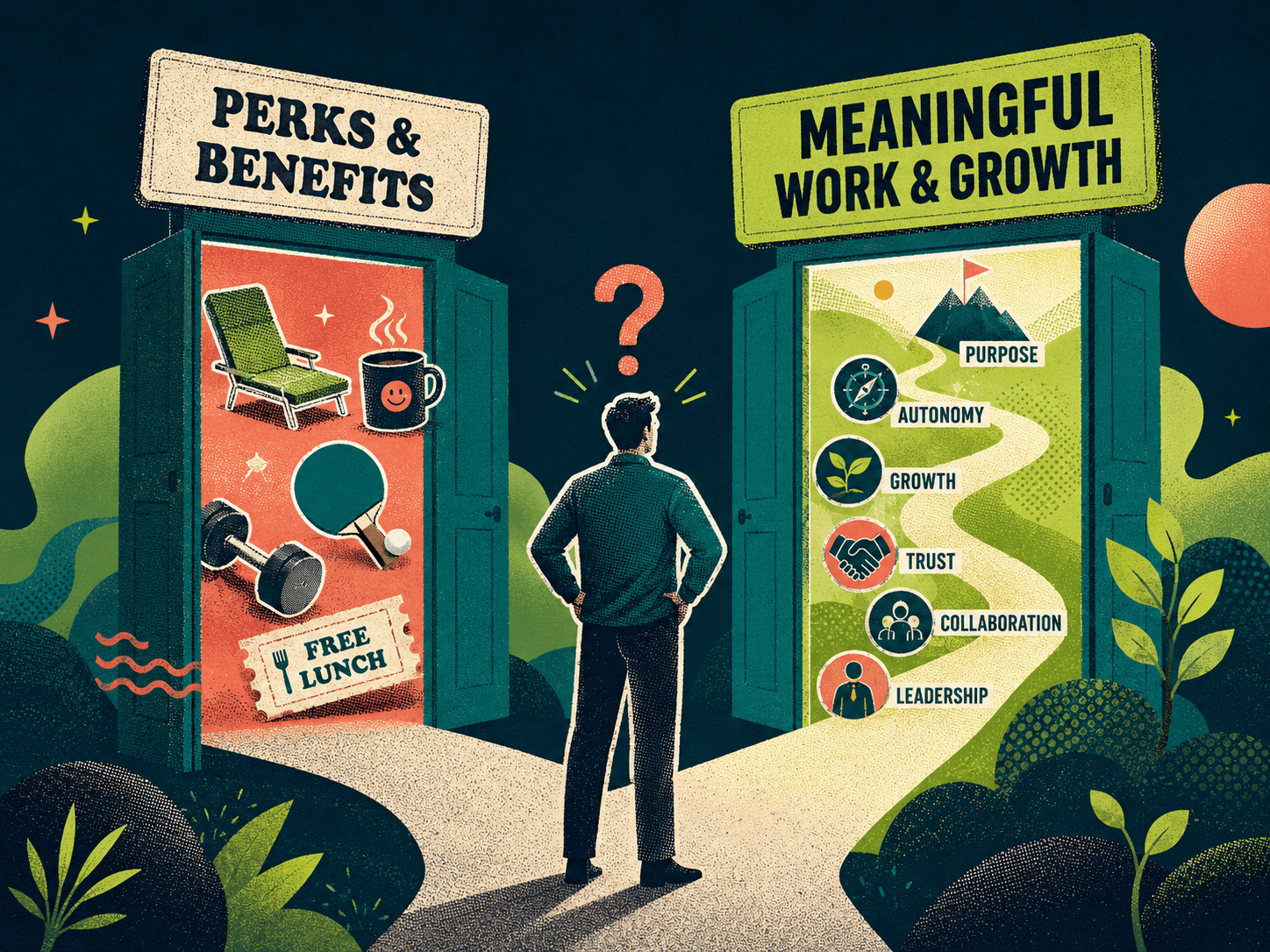
The message from the market is becoming clear: benefits alone no longer drive loyalty. In 2026, the question is no longer “What do we offer?” but “How do people actually experience working here?”

From a Human Resources perspective, this shift represents both a challenge and an opportunity, one that requires HR to move beyond operational excellence and into a truly strategic role.


The Myth: Benefits Equal Retention

Traditional thinking has long suggested that better benefits lead to happier employees, and happier employees stay longer. While compensation and benefits remain important, they are no longer differentiators; they are expectations.

In many industries, competitive salaries, hybrid work models, and standard perks have become table stakes. When everyone offers similar packages, they lose their power to retain.

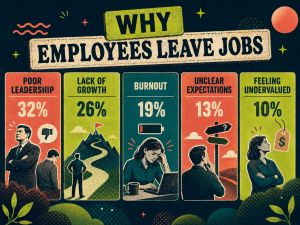
What organizations often overlook is that employees rarely leave because of benefits. They leave because of:

  • poor leadership
  • lack of growth
  • unclear expectations
  • feeling undervalued or unheard
  • chronic overload and burnout

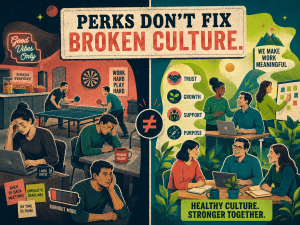
Benefits may attract candidates, but they do not compensate for a broken day-to-day experience.

What the Market Is Telling Us

Several major shifts are shaping today’s workforce:

  1. Flexibility has become non-negotiable
    Employees expect autonomy over when, where, and how they work. Flexibility is no longer perceived as a perk, but as a sign of trust.
  2. Purpose outweighs prestige
    Job titles and brand names matter less than meaningful work, clear impact, and alignment with personal values.
  3. Leadership quality defines employee experience
    People don’t leave companies, they leave managers. The behavior, communication style, and emotional intelligence of leaders directly influence engagement and retention.
  4. Burnout is no longer an individual problem
    Employees increasingly recognize burnout as a systemic issue. Organizations that ignore workload design, recovery, and psychological safety are losing talent faster.

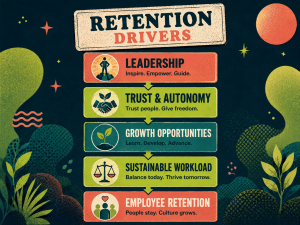
These trends point to one conclusion: retention is built inside the organization, not marketed externally.

What Employees Actually Look for in 2026

From an HR lens, retention today is less about adding new initiatives and more about strengthening fundamentals.

Employees want:

Clarity
Clear roles, realistic expectations, and transparent decision-making. Uncertainty creates stress, even in high-paying roles.

Growth without exhaustion
Development opportunities that are sustainable, not constant upskilling layered on top of already full workloads.

Trust and autonomy
Micromanagement is one of the fastest ways to disengage talent. Employees want ownership, not surveillance.

Psychological safety
The ability to speak up, make mistakes, and challenge ideas without fear of negative consequences.

Fairness and consistency
Not perfection, but predictability. Favoritism and opaque decisions erode trust faster than any policy gap.

The Evolving Role of HR

In this environment, HR can no longer operate solely as an administrative or support function. The most effective HR teams act as connectors between people and business strategy.

This means shifting focus from:

  • reactive problem-solving
    to
  • proactive culture design

HR’s value lies in asking difficult questions:

  • Are our leaders equipped to manage people, not just performance?
  • Do our processes support sustainable productivity or constant urgency?
  • Is our culture defined by values on paper or behaviors in practice?

Retention is not owned solely by HR, but HR is uniquely positioned to make invisible problems visible.

Practical HR Actions That Drive Retention

While there is no universal formula, several practices consistently show impact:

  1. Stay Interviews Instead of Exit Interviews
    Understanding why people stay is often more valuable than understanding why they leave, especially when it’s already too late to act.
  2. Transparent Career Paths
    Not everyone wants to become a manager. Clear progression options, both vertical and horizontal, reduce frustration and attrition.
  3. Leadership Development Focused on People Skills
    Technical excellence does not equal leadership readiness. Training managers in feedback, coaching, and emotional intelligence is one of the highest ROI investments HR can advocate for.
  4. Regular Workload and Capacity Reviews
    High performers are often rewarded with more work, not better work. HR can help identify unsustainable patterns before burnout occurs.
  5. Data-Informed, Human-Centered Decisions
    Engagement surveys, pulse checks, and qualitative feedback should guide action, not just be collected for reporting.

Employer Branding vs. Employee Reality

A growing risk for organizations is the gap between how they present themselves externally and how employees experience the company internally.

When branding promises flexibility, growth, and care, but internal reality delivers pressure, ambiguity, and silence, trust erodes quickly. This mismatch fuels early turnover and damages long-term reputation.

Strong employer branding is not created by campaigns. It is created when HR policies, leadership behavior, and daily practices align.

Looking Ahead

As we move further into 2026, organizations that rely solely on benefits and surface-level initiatives will continue to struggle with retention. Those who succeed will be the ones willing to redesign work itself, not just package it attractively.

For HR, this moment is pivotal. The function has the insight, data, and proximity to people to influence meaningful change. But it requires courage to challenge outdated assumptions and partner closely with leadership.

In a market where talent has options, retention is no longer about keeping people comfortable.

It’s about making them feel respected, supported, and able to grow, without burning out.

And that is not a benefit.
It is a strategy.